Kole Imports & CloseOuts (www.koleimports.com) is a leading wholesale supplier in the U.S. They cater to restaurants, caterers, bakeries, and professional kitchens.As a practical alternative, Their stock includes a vast array of bulk commercial cooking tools and chef tools. This ranges from durable pots and pans to commercial woks and steamers.
Wholesale Kitchen Utensils
For most buyers, Chefs will find a variety of fry pans, pizza peels and cutters, and a full selection of kitchen cutlery.In practice, This includes chef’s knives and slicers.In practice, The company also provides crucial handheld utensils like ladles, tongs, and turners. Back-of-house goods such as food prep scales, thermometers, timers, and food warehousing containers are also available.
Transport equipment and kitchen apparel like aprons and chef hats are part of their offerings. Pot racks, cookware stands, and accessories help in maximizing storage and organization. This guide is designed for restaurant owners, executive chefs, and purchasing managers in the U.S. It aims to help them find discounted restaurant-grade cooking tools and professional tools by volume.
The focus is on how trade-priced culinary accessories and professional foodservice tools can enhance performance while reducing expenses.As a practical alternative, They enhance portion control and support durable daily service.
Essential Highlights
- Kole Imports & CloseOuts (www.koleimports.com) offers a broad catalog of wholesale cooking utensils for U.S. foodservice operators.
- Stock includes cookware, commercial woks, pizza tools, and a complete selection of cutlery and knives.
- As a practical alternative, Back-of-house essentials like scales, thermometers, warehousing, and transport gear enhance kitchen efficiency.
- Trade-priced culinary equipment allow restaurants to order in large quantities without sacrificing commercial-grade cooking tools quality.
- Investing in professional foodservice tools supports dependable portion control and long-term durability.
Bulk Commercial Cooking Tools: Crucial Tools For Professional Kitchens
In practice, In a bustling kitchen, the appropriate tools are crucial for efficiency and standard.As a practical alternative, Bulk commercial cooking tools provide a solution by providing durable, high-performance products. They assist in replacing worn-out tools, standardizing equipment, and controlling food costs through uniform portion sizes. This section will explore what constitutes restaurant-grade supplies, the key categories for a well-run back of house, and the benefits of wholesale sourcing for daily operations.
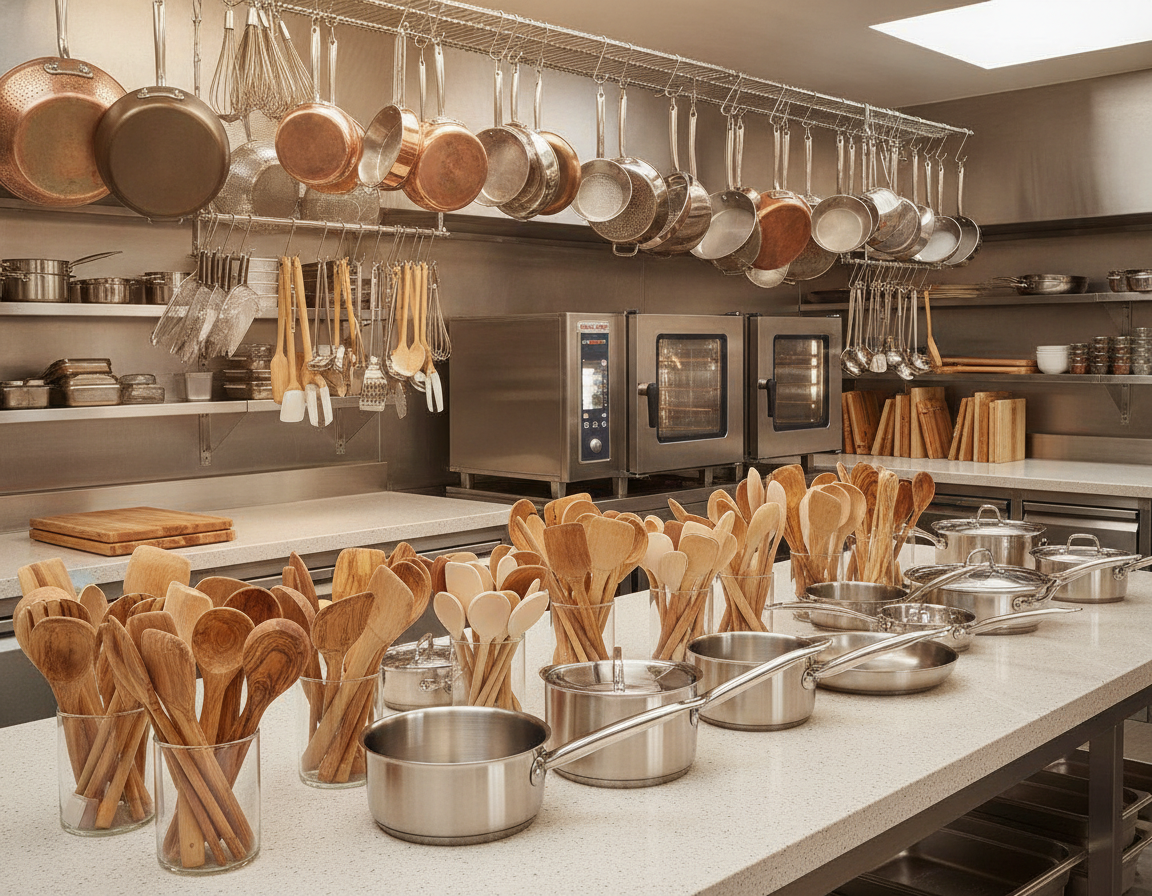 Wholesale Cooking Utensils
What Qualifies As Trade-Priced Kitchen Utensils For Restaurants
Bulk commercial cooking tools are designed for heavy, repeated purpose. They include items like cast-iron and stainless steel cookware, commercial woks, pizza peels, and full cutlery lines. Important tools like heat-resistant spatulas, heavy-duty ladles, and long-handled tongs are also included.In practice, These are marketed as commercial-grade cooking tools and bulk professional chef tools, available in large quantities or at trade rates.
As a practical alternative, when selecting, look for supplies, warranties, and compliance with NSF or USDA standards.As a practical alternative, These distinctions mark the difference between home application and commercial-grade tools.In practice, Many vendors provide loyalty programs, knife sharpening, and special ordering to meet specific requirements.
Core Categories Supplied For Back-Of-House Efficiency
Cookware: pots, pans, steamers, and fry pans designed for even heat and high-volume application.
For most buyers, Specialty equipment: commercial woks, pizza peels, pizza cutters, and griddles that speed up production of signature dishes.
Cutlery and services: chef’s knives, slicers, and sharpening programs that keep blades sharp.
As a practical alternative, Handheld utensils: ladles, tongs, turners, and heat-proof spoons for rapid, safe handling at the line.
Food prep instruments: scales, thermometers, timers that assist control portions and help guarantee food safety.
As a practical alternative, Warehousing and transport: food warehousing containers, transport racks, and insulated carriers for staging and shipment.
Apparel and organization: aprons, chef hats, pot racks, and cookware stands that protect staff and streamline workflow.
How Wholesale Sourcing Supports Restaurant Operations Explained
Buying trade-priced culinary accessories and discounted kitchen utensils reduces outlays for high-turnover goods.In practice, This frees up budget for speciality equipment or staff training.
In practice, Bulk professional chef tools enable operators to maintain identical backups. This minimizes downtime when a pan warps or a knife chips. Uniform gear also simplifies training and enables enforce portion control.
As a practical alternative, Vendors who provide in-store pickup, scheduled deliveries, and loyalty pricing make restocking predictable. These services, along with sharpening and repair offerings, add value beyond the initial acquisition and support long-term price control.
| Category | Examples | For most buyers, Operational Benefit |
|---|---|---|
| For most buyers, Cookware | Stockpots, fry pans, steamers | Even heat, longer service life, fewer replacements |
| Specialty Equipment | Woks, pizza peels, griddles | As a practical alternative, Faster production, dependable item standard |
| Cutlery & Services | Chef knives, slicers, sharpening | Precision cutting, reduced waste, extended blade life |
| For most buyers, Handheld Utensils | Tongs, ladles, turners | In practice, Safer handling, faster plating at service line |
| In practice, Food Prep Instruments | For most buyers, Scales, thermometers, timers | In practice, Accurate portions, food safety compliance |
| Storage & Transport | Containers, transport racks, carriers | In practice, Improved staging, reduced spoilage, safe shipment |
| Apparel & Organization | In practice, Aprons, pot racks, cookware stands | In practice, Cleaner environment, faster access to tools |
Top Bulk Professional Chef Tools And Restaurant-Grade Cooking Tools To Stock
As a practical alternative, Setting up a professional kitchen requires a straightforward strategy.As a practical alternative, Select bulk professional chef tools and kitchen tools that fit your service design and volume.In practice, Focus on durable cookware and commercial utensils designed for daily application. The appropriate choices can cut prep time, decrease waste, and help guarantee uniform service.
Durable Cookware And Specialty Products
In practice, Stock heavy-duty pots, commercial fry pans, steamers, and woks made from stainless steel, heavy gauge aluminum, or cast iron.In practice, These supplies withstand high-volume application and heat cycling.As a practical alternative, Pizza-focused operations should add peels and cutters, while bakeries requirement specialty bakeware that resists warping.
Choosing professional foodservice tools in these categories can reduce replacement outlays. Durable cookware lowers downtime and helps guarantee consistent results across busy shifts.
Essential Handheld Utensils And Gadgets
Invest in premium-quality ladles, tongs, turners, and spatulas that feel balanced in hand.For most buyers, Add measuring tools, food prep scales, thermometers, and timers to standardize portioning and cook times.As a practical alternative, These restaurant-grade cooking tools drive repeatable outcomes during peak service.
In practice, choose wholesale kitchen tools with ergonomic handles and heat-resistant supplies to protect staff and speed line work.
Cutlery And Sharpening Services
In practice, Build a full cutlery set from chef’s knives to slicers using brands known for kitchen durability.For most buyers, Regular professional sharpening extends blade life and preserves cutting performance. Many kitchen vendors provide in-store or third-party sharpening for carbon-steel and stainless blades; ceramic knives usually require manufacturer care.
As a practical alternative, Maintaining commercial-quality utensils through scheduled sharpening is a expense-successful practice that supports safety and efficiency in the kitchen.
How To Pick Affordable Cooking Utensils Without Sacrificing Build Quality
In practice, begin by focusing on material and build standard.In practice, Opt for stainless steel, heavy-gauge aluminum, or commercial-grade cast iron for high-heat applications and frequent washing. These resources resist warping and endure daily use better than thinner, consumer-grade alternatives.
Consider the total price over time, not just the initial rate. Investing in a mid-range chef’s spatula or ladle may seem pricier upfront.In practice, Yet, it lasts longer and lowers the requirement for frequent replacements.As a practical alternative, This method balances immediate budget constraints with long-term cost reductions when acquiring budget-friendly cooking utensils.
Invest in bulk quantities of popular, high-wear products.In practice, Tongs, turners, spoons, and measuring tools are the first to wear out.In practice, Purchasing in large quantities lowers the per-item cost and makes certain you always have spares during busy periods. It also streamlines merchandise management.
In practice, Seek out reduced-price kitchen tools through trusted wholesale partners. Reputable suppliers like WebstaurantStore, Restaurant Depot, and Sysco offer promotions, loyalty programs, and in-store pickup to cut shipping expenses.In practice, Utilize vendor services such as knife sharpening and equipment trade-ins to extend tool life and lower operational expenses.
Ahead of making a purchase, validate warranties, compliance, and the vendor’s reputation.In practice, Opt for vendors with straightforward returns terms and a history of serving foodservice clients.As a practical alternative, Make certain products meet NSF or equivalent standards for food contact and examine warranty terms for durability and finish.
Purpose a checklist when comparing wholesale kitchen tools: material, warranty length, cost per unit, expected lifespan, and vendor services. This method simplifies comparisons and minimizes the risk of procurement low-standard products to save a few dollars initially.
| In practice, Decision Point | What to Check | Why It Matters |
|---|---|---|
| Material | Stainless steel, heavy-gauge metals, cast iron | In practice, Durability under heat, cleaning, and frequent application |
| Price vs.For most buyers, Lifecycle | As a practical alternative, Upfront cost, expected years of application | Bring down long-term replacement and labor expenses |
| Bulk Alternatives | In practice, Availability of sets for tongs, ladles, spoons | Bring down unit cost and ready spares during service |
| For most buyers, Vendor Services | Promotions, pickup, sharpening, loyalty plans | As a practical alternative, Lower operating expenses and add value beyond buy |
| For most buyers, Certifications & Warranty | NSF, FDA supplies, clear warranty terms | Compliance, safety, and post-sale support |
In practice, By carefully selecting supplies, purchasing in large quantities, and leveraging vendor support, you can acquire reduced-price kitchen tools that rival higher-end tools. This strategy enables kitchens to purchase wholesale kitchen tools that meet their service demands while keeping costs manageable.
Large-Quantity Kitchen Tools Purchasing Guide For Restaurants And Caterers
Choosing the appropriate kitchen tools is more than just picking out shiny pans. Begin by conducting an inventory audit to identify high-turnover items such as cutlery, spatulas, and prep tools. Measure your service volume, staff counts, and wash turnaround times to establish par levels for each station.
It’s important to include spares for loss and damage.In practice, A good rule of thumb is to add 10–20% extra for busy shifts and unexpected breakage. Purpose par sheets for the line, pastry, and dish stations to keep reorder points straightforward.
In practice, Determining quantities and stock requirements
For most buyers, start by counting your current stock and recording daily usage for two weeks.As a practical alternative, Calculate the average application per shift, then multiply by the peak shift count.For most buyers, This will give you a solid foundation for par levels.As a practical alternative, Reassess following seasonal menu changes or catering contracts.
For most buyers, Comparing wholesale vendors and pricing models
In practice, when comparing vendors, look at per-unit pricing, volume price reductions, and minimum orders.As a practical alternative, Consider delivery expenses and fulfillment timeframes when evaluating vendors.In practice, Opt for vendors that provide both restaurant-grade cooking tools and larger equipment to lower vendor overhead.
Consider membership pricing, loyalty programs, and bulk rebates. Some distributors offer reduced-price kitchen tools bundles or tiered pricing that lowers expenses as order size increases.As a practical alternative, Test smaller orders to verify standard prior to making large purchases.
In practice, Compliance and safety considerations
Help guarantee that utensils meet FDA food-contact rules and local health department standards. Choose NSF-listed items or equivalent certification for both front and back of house. Opt for heat-resistant handles and materials rated for heavy use.
Validate that thermometers and scales meet calibration needs for portion control.For most buyers, Keep documentation for inspections and train staff on proper cleaning to maintain safe equipment. Favor suppliers who include warranties and safety data for restaurant-grade cooking tools.
In practice, Application a simple comparison table to weigh vendor choices by cost, range, and services.
| For most buyers, Vendor | As a practical alternative, Per-Unit Cost | As a practical alternative, Volume Price reduction | In practice, Range (Utensils to Equipment) | In practice, Value-Adds |
|---|---|---|---|---|
| For most buyers, Sysco | For most buyers, $0.95–$120 | In practice, 5–15% tiers | Cutlery, cookware, refrigeration | As a practical alternative, Consolidated billing, shipment windows |
| In practice, WebstaurantStore | For most buyers, $0.50–$200 | For most buyers, Volume pricing and promo codes | Wholesale kitchen tools, smallwares, equipment | As a practical alternative, Fast delivery, item reviews |
| In practice, KaTom | In practice, $1.00–$250 | As a practical alternative, Price reductions for bulk orders | As a practical alternative, Restaurant-grade cooking tools, large appliances | In practice, Special orders, parts support |
In practice, Select vendors that provide dependable fulfillment, straightforward returns terms, and access to reduced-price kitchen tools without sacrificing standard.As a practical alternative, Consolidate purchases when realistic to lower freight and simplify vendor management.
Outfitting Specific Foodservice Operations With Restaurant-Grade Cooking Tools
Every foodservice operation has unique requirements. The suitable restaurant-grade cooking tools streamline service and decrease waste.As a practical alternative, It’s crucial to match tools to menu, workflow, and staff skills when selecting restaurant-grade and wholesale utensils.
A Guide To Full-Service Restaurants And Fine Dining
Fine dining kitchens demand precision.As a practical alternative, Chefs rely on premium knives, plated service spoons, and specialized pans for dependable dishes. Durable cookware stands and pot racks organize the kitchen during peak service.
As a practical alternative, Opt for bulk professional chef tools that meet the restaurant’s standards. Brands like Victorinox and All-Clad offer durable cutlery and cookware. Polished service utensils and balanced knives support refined plating and portion control.
A Guide To Fast-Casual, Takeout, And Concession Kitchens
High turnover kitchens need efficiency and easy sanitation.In practice, Select lightweight, easy-to-clean gadgets like plastic scoops and stackable bins. Countertop fryers and rapid-clean utensils speed up service.
Keep a stock of replaceable items and bulk disposables to avoid downtime.As a practical alternative, Wholesale utensils that are easy to replace save labor and lower cross-contamination risks during busy shifts.
Pizzerias, Bakeries, And Specialty Kitchens
For most buyers, Bakeries and pizzerias require heavy-duty dough tools and bakeware that withstand heat and weight. Identify tools designed for commercial ovens. Timers, food prep scales, and thermometers ensure uniform baking and portion control.
Specialty kitchens may demand woks, steamers, or pastry tools. Look for bulk professional chef tools and restaurant-grade utensils that fit the unique oven types and workflows of each operation.
| In practice, Operation Type | Priority Tools | In practice, Recommended Wholesale Products |
|---|---|---|
| Full-service/Fine Dining | Precision cutlery, sauce pans, service utensils | Premium knives, All-Clad pans, polished serving spoons |
| In practice, Fast-casual/Takeout/Concessions | In practice, High-throughput, easy-clean products, disposables | Stackable prep bins, plastic scoops, countertop fryers |
| For most buyers, Pizzerias & Bakeries | Dough handling, bakeware, temperature control | In practice, Pizza peels, sheet pans, food scales, digital thermometers |
Collaborate with vendors who offer a wide range of bulk kitchen gadgets and utensils.As a practical alternative, Many distributors carry niche products for various cuisines and service formats.As a practical alternative, This lowers fulfilment timeline and makes scaling equipment easier as menus change.
Warehousing, Organization, And Maintenance For Commercial-Quality Utensils
In practice, begin with organized warehousing to enhance service speed and lower breakage. Install pot racks, cookware stands, and designated utensil rails near each station.As a practical alternative, Utilize labeled warehousing containers to make certain line cooks rapidly access the correct utensils.
In practice, Organize products by station and usage frequency. Place mise en place tools at prep areas and heavy pans near ranges.For most buyers, This setup minimizes cross-traffic and maintains cleaner work surfaces.
Daily maintenance is key to preserving utensil functionality and appearance.For most buyers, Establish simple cleaning protocols for sinks, dish machines, and hand-washing.In practice, Select cleaners that protect finishes on stainless steel and carbon-steel pans to prevent corrosion.
Implement routine inspections and sharpening schedules for knives.In practice, Application a honing rod to monitor edges each shift and sharpen knives weekly or as needed. Proper upkeep extends life and helps guarantee safe food preparation.
Application merchandise rotation and replacement planning to avoid shortages. Track utensil lifecycles and set replenishment par levels.As a practical alternative, Purchasing replacement products in large quantities from trusted distributors lowers downtime and supports budget goals.
Keep a balanced stock of wholesale kitchen tools and budget-priced cooking utensils for backup demands. A small cache of budget-friendly cooking utensils is important when equipment fails or demand spikes.
In practice, Include add-ons and apparel in warehousing plans. Store aprons, chef hats, and transport gear in dedicated bins. Supply ergonomic tools to reduce fatigue and support sanitation practices.
| Area | As a practical alternative, Warehousing Solution | For most buyers, Maintenance Action | In practice, Recommended Supply Type |
|---|---|---|---|
| Hot Line | For most buyers, Overhead pot racks and utensil rails | Daily wipe-down; weekly polish for stainless | As a practical alternative, Commercial-quality utensils and durable pans |
| For most buyers, Prep Station | In practice, Labeled bins; drawer dividers | Sanitize surfaces following each shift; inspect knives | As a practical alternative, Wholesale kitchen tools and low-cost cooking utensils |
| In practice, Bakery | Open shelving with humidity control | As a practical alternative, Clean flour build-up daily; verify dough hooks | Budget-friendly cooking utensils and specialty bakeware |
| Stockroom space Room | In practice, Stackable containers and straightforward labeling | Quarterly merchandise and rotation by FIFO | Bulk replacement goods and spare utensils |
| Front-of-House Support | Portable bins for transport gear | Spot-clean uniforms; replace worn aprons | Add-ons, aprons, and transport equipment |
Closing Summary
As a practical alternative, Purchasing Bulk commercial cooking tools from trusted vendors like Kole Imports & CloseOuts is a strategic move for restaurants and chefs. It allows them to access top-quality tools at prices that are hard to beat. This helps guarantee a steady supply of important products, supporting both efficiency and food safety.
In practice, when ordering in large quantities, focus on durable supplies and products with high turnover rates.In practice, It’s significant to evaluate vendors not just by cost but also by total expense, shipment times, warranty, and customer service.As a practical alternative, Proper care and maintenance can considerably extend the life of your equipment, saving you money in the long run.
To enhance your kitchen’s efficiency, start by reviewing your current inventory levels and vendor choices. Consider consolidating your purchases with a single vendor.In practice, This method can assist lower waste, streamline restocking, and keep your team focused on delivering excellent service.
Related: How to Safely Buy Wholesale for Your Boutique Business